I love math. I was a math major, and I currently teach math part-time to middle schoolers. For much of my life, I spent hours every day studying math and solving problems. Some of these problems could be solved in under five minutes; others took hours, or even days or weeks.
Math taught me about struggle. I learned to persevere with problems even if I wasn’t sure I’d figure out the answer. For the weekly problem sets in undergrad, I never knew how many of the problems I’d complete, or how many my peers would complete. I grew accustomed to the uncertainty and stress and practiced battling my self-doubts. When faced with a difficult problem, which sometimes looked like gibberish at first glance, I learned to believe in myself and give a best-effort attempt. I also gained awareness of when the problem was too difficult for me to solve (which is a practice in self-love). Especially when a professor during my senior year put an unsolved problem on our homework, learning to balance self-belief with an acceptance of failure was especially vital. In the struggle, triumph, and failures, I found a beauty that continues to draw me back, a beauty which I hope to inspire in my students and friends who’ve had primarily negative experiences with math.
I work as an AI engineer in Silicon Valley, and we talk about AI with a borderline obsession. It’s the savior to our problems, a gateway to unlimited productivity, and the fastest way to get rich. It’s always the most important topic of discussion, sparking conversations on efficiency and environmental impact, job loss and endless new opportunities, and post-AGI utopia or terrorizing Terminator-like autonomous robots. Whatever one’s stance on AI, nowadays it is seemingly ubiquitous. Working professionals can’t go without it, it’s invaluable for benign and commonplace questions (“How often to water my pothos plant?”, “What’s wrong with my blender?”), and kids even use it for emotional validation and peer-replacements.
The models are already supplanting entire fields and industries, with white-collar jobs heavily under attack. A striking recent development that most could have never fathomed just a year ago was OpenAI’s Astra model solving a Millenium Prize Problem, one of the most challenging unsolved problems in mathematics. As a math major, this news surfaced a plethora of emotions. From one standpoint, this opens a wave of possibilities. Humans with AI can now solve problems previously thought to be unsolvable, which can lead to significant (and hopefully positive) real-world impacts. On the other hand, it places a singular splotlight on the question of why I and other math enthusiasts do math in the first place. When models can solve all the problems, what’s left for us? Is it worth struggling with these problems, knowing I can ask Gemini for the answer? What do I tell my students, who know that in ten years, there might not exist a problem that humans can solve and models can’t? Why should they do math and struggle (and for some of these problems, profoundly) in the first place?
Especially for pure math researchers, where real-world applications often aren’t the primary aim–math is simply a source of intrinsic joy and an avenue for discovery, creativity, and beauty–OpenAI’s Astra model solving these problems, sometimes in mere hours, may contribute a sense of meaninglessness. Were these problems even worth solving in the first place? Should I attempt to solve new problems, knowing that OpenAI could publish an article any day detailing 10,000 of their agents autonomously solving the question? Should I myself use AI while doing math (and if I don’t, will I be left behind?) I could not imagine what it currently feels like to be a math doctoral student, who, likely not having yet left their academic mark, lives in a world where (already today) most math problems don’t require human solving, and any insight or novel idea can be falsely attributed and reduced to an inanimate machine’s generation.
I argue that these questions are not limited to math researchers and similar types of academics. Is it worth drafting that email myself, knowing that AI can compose a beautiful, professional version better than I ever could? Is old-school coding dead, and ought I to leave the model to design full codebases and production-level code with minimal human intervention? Is it worth seeing a therapist, knowing that these models are versed in all the nuances of the DSM, billions of human stories, and nearly all the spiritual traditions?
We are just entering this AI-dominated world, with its hazy answers and unclear future. I invite, and in fact strongly encourage, you to reflect on these questions and the role of AI in your lives. What brought you meaning in work before? Was work boring, and you could not be more glad that AI can do your work for you? Do you miss writing code and the challenge it presented, and feel a sense of grief thinking how your proudly-written code can be composed by a machine, in a better way, in seconds?
Work is a fundamental aspect of humanity. It’s our way of contributing to society, us using our physical bodies for good, and a clear source of meaning. People with no work often feel lost. Meaningful work gives our lives direction and purpose. Retirees seek volunteer opportunities, not because they need to, but because they still want to do something good and meaningful with their time. It’s not necessarily about the level of production or output. Work’s meaning often comes from directing one’s mind and energy towards a cause that brings about some benefit, intrinsic or extrinsic.
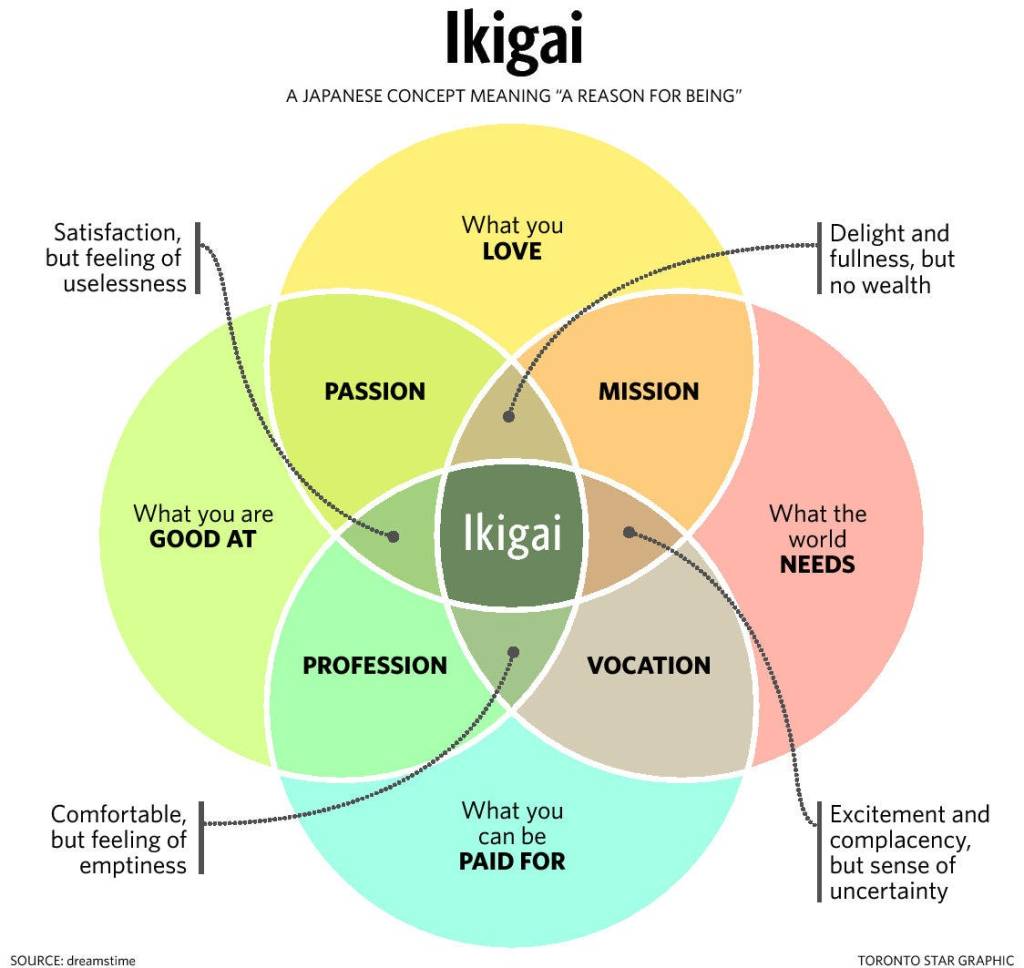
Many now need to reanalyze their sources of meaning, with work looking drastically different. In many cases, it’s easy now to just sit back and let AI do the work for us. In regards to this, I forgo placing any normative judgement. I only ask you to reflect on what you want out of work and what about it brings you meaning. Even outside of our daily 9-5’s, it’s vital to engage with something. Paint, go on a run, sing, blog. People in the Bay Area love talking about a post-AGI utopia where no one has to work and everyone has everything they need. But I hope in that world we are still doing something. Or else, what’s the point.
We can waste away, doomscroll endlessly while aware of our cognitive decline, and watch our lives and what gave it meaning become automated away. Or, we can find new ways to engage, and direct our mind and body toward something meaningful and stimulating.
Personally, I can’t imagine a post-AGI world without any problems. We are still human, and humans, like from the beginning of history, will always have flaws. We will be greedy, selfish, hateful, and unforgiving. There will always be issues in this world, because it is a human world. And with issues comes work to be done. If you are struggling to find meaning in work, I hope you reflect on the causes where you are most needed, where your time, talents, and resources can best be utilized. This manner of thinking reveals spaces where people find work meaningful, where they live aflame and work and act in line with their values.
It is easy to decay and waste away. It is easy to offload all our tasks to the machine, believing we live in a newfound utopia, and merely consume rather than generate. However, I argue that we must promote a culture of active resistment, both for our own sense of purpose and the sake of the world. A world with no work done by humans and with the boundless assortment of human flaws? Not a world I want to live in.



Leave a Reply